
Persian Language and Iranian/Persianate Studies Faculty
Persian Studies Lecture Series
Persian Language at UChicago (Farsi / Dari / Tajiki = тоҷикӣ /فارسی / دری)
Persian = Farsi? Dari? Tajiki?
Persian in the Workplace
Persian Study at UChicago
Persian Student Essay Prize
Persian Language, Culture, and Literature Courses Offered at the University of Chicago
Persian Language Courses
Iranian/Persianate Studies Courses
Major and Minor
Persian Placement Test
Persian Circles
Literature in Persian Language Pedagogy Webinar
AI-Driven Language Pedagogy for Less Commonly Taught Languages Webinar
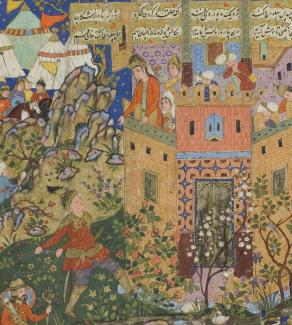
Persian Language and Iranian/Persianate Studies Faculty

Persian Faculty in Other Departments
Alireza Doostdar (Divinity School)
Yousef Casewit (Divinity School)
Gregory Maxwell Bruce (South Asian Languages & Civilizations)
2026-2027 Persian Studies Lecture Series
October 8, 2026 - Franklin Lewis Memorial Seminar –Alexander Jabbari, Associate Professor of Asian and Middle Eastern Studies at the University of Minnesota, is a literary historian interested in the literature, history, and philology of the Middle East and South Asia, and he works in Persian, Arabic, Urdu, and other languages. Title TBA.
March 4, 2026 - Heshmat Moayyad Memorial Lecture – Kevin van Bladel, Professor of the Classical Near & Director of Graduate Studies at Yale University, studies the Classical Near East. His historical framework is the regions of Central Asia, Iran, Iraq, and Syria circa 200–1200, especially the Sasanian Persian Kingdom, the early Islamic empire, and its successor states up to the Seljuqs. Title TBA.
Persian Language at UChicago (Farsi / Dari / Tajiki = тоҷикӣ /فارسی / دری)
Persian is the official language of today’s Iran, and one of the two official languages in both Afghanistan and Tajikistan. Outside of Afghanistan, Iran and Tajikistan, Persian is still spoken by a significant minority in Uzbekistan, and by diaspora communities throughout North America, Europe, Israel and Australia. All in all, an estimated 110 million people throughout the globe speak Persian, placing it among the top 20 or so world languages in terms of the number of speakers.
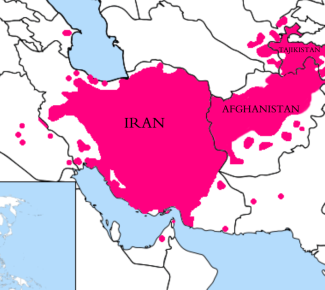
Historically Persian served as a prestige language of literature and administration across a large swath of Central Asia; in southwest Xinjiang province, China; in South Asia (including Kashmir, Pakistan, northern India, Bengal, and the Deccan); in the Caucasus (Armenia, Azerbaijan, Daghestan); in the Ottoman territories of Anatolia and the Balkans; in parts of Iraq (especially near the Shi`i shrines in Najaf and Karbala); and along the Persian Gulf littoral, as well as on the Iranian plateau. It was also a widespread spoken koine throughout much of Asia along the Silk Route. Scholars today refer to this area where the Persian language and/or its literary, political and administrative culture held sway as the “Persianate” zone.
Persian = Farsi? Dari? Tajiki?
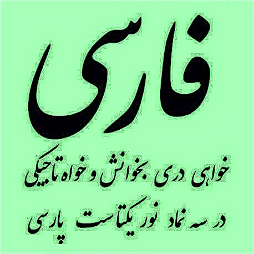
The Greeks gave us the name Persia (Περσῐ́ς) after Old Persian Pārsa, the name for the province in south central Iran at the center of the Achaemenid empire, and it remained the name of the country until 1935 when Reza Shah officially pronounced the modern nation-state would henceforth be called Iran.
Although Persian is mutually understood by educated speakers from eastern Iraq through to the borders of China, Persian speakers in Iran, Afghanistan, and Tajikistan use different names when describing their common language. In Iran, Persian speakers call the language Fârsi, or Pârsi (فارسی / پارسی); in Afghanistan, the 1962 constitution officially recognizes the language as Dari ((دری; and in Tajikistan– where the language has been written in the Cyrillic script since WWII – it is officially known as Tâjiki, or Tojiki (тоҷикӣ). In the modern era of nation-states with different ideologies, distinct educational and administrative systems, and divergent national histories, the national varieties of Persian (Iranian, Afghan and Tajik) have coalesced around the pronunciation of their respective capital cities: Tehran, Kabul and Dushanbe. Most universities offering Persian as a second language – and this includes Chicago -- teach the modern standard Persian of Iran.
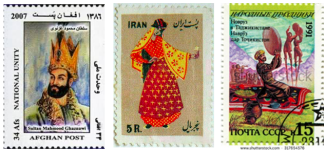
Because Iran has about twice the population of Afghanistan and Tajikistan combined, the Iranian word “Farsi” is sometimes also used in Afghanistan and Tajikistan as well, and since the 1960s and 1970s when large numbers of Iranians studied in the US and large numbers of Americans worked in Iran, the word “Farsi” has also been used in informal American English in place of Persian. In linguistic terms, however, Farsi refers to the particular national variety of Persian spoken in Iran, as distinct from the national varieties of Persian spoken in Afghanistan (Dari), or Tajikistan (Tajik Persian), in much the same way that American, Australian, British and Indo-Pakistani English are all distinct national varieties of the English language.
Persian is an Indo-European language, and therefore structurally related to English, with which it shares many cognate words (barâdar = brother, mâdar – mother, dokhtar = daughter, ast = is, am = am, etc.). In fact, Persian was one of the languages that led scholars like Sir William Jones to deduce the existence of a family relationship between English, German, Latin, Greek, Sanskrit and Persian as languages descended from a common sprachbund: proto-Indo-European.
Persian belongs to the Indo-Iranian branch of this family, which includes Sanskrit, Hindi, Punjabi, etc. But Persian’s more immediate relatives are found among the Iranian language family which includes the ancient scriptural language of the Zoroastrian religion, Avestan, as well as other now extinct languages such as Bactrian, Sogdian, Khwarezmian (Chorasmian), Saka, the Scytho-Sarmatian languages, and Parthian. The modern Iranian languages in use today, in addition to Persian, include Kurdish (Kurmanji and Sorani), Zaza, Ossetic, Luri, Pashto (the second official language of Afghanistan), and Baluchi.
Persian itself is roughly described as having three historical stages:
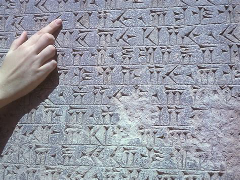
Old Persian was written in cuneiform, and used in the Achaemenid empire for royal inscriptions, seals and clay tablets, from the early 6th to the late 4th century BCE. Old Persian was an inflected language with multiple case endings, and singular, dual, and plural forms of the nouns.
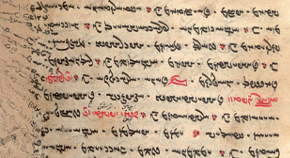
Middle Persian, including Parthian (Pahlawik) and Persian (Pārsīg and Pahlavi), was written using a modified form of the Aramaic script, both as a phonetic syllabary and as logograms. Middle Persian is attested in inscriptions of the Sasanian period and in book literature, mostly Zoroastrian confessional works, but also Manichaean and Nestorian texts, as well as secular literature, some of it orally transmitted for a while before being written down from about the 6th century CE well into the Islamic period in the 9th and 10th century CE.
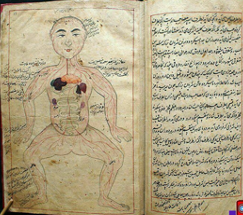
(New) Persian, written in the Arabic script, emerged in written form in the 10th century at the Saffarid and Samanid courts, and has remained fairly stable over the past millennium, so that texts like the Shahnameh of Ferdowsi (completed 1010 CE), can still be generally understood by Persian-speakers today. It is this new Persian that became the second language of learning (science, geography, history, administrative manuals), religion (exegesis, devotions, Sufi manuals, philosophy, theosophy), and literature (poetry, prose belles lettres, mirrors for princes) in the Islamic world, through which Islam was spread and promoted in Central Asia, South Asia and Seljuk Anatolia.
Apart from the many Persian words cognate with other Indo-European languages, some Persian words have been borrowed into Europe during the Middle Ages, or directly into English through the British in India, where Persian was an official language until the 19th century (such as lâzhvard – azure; tâfta – taffeta; pâdzahr – bezoar; shâh mât – checkmate; bakhshesh – bakhsheesh kamarband – cummerbund; kâravân = caravan; bâzâr – bazaar, khâki – khaki, etc.).
Persian in the Workplace
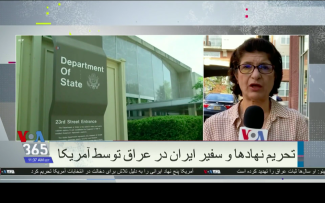
Because of the geopolitical significance of the area, Persian is a critical language for foreign and public policy, international development, international law, foreign service, national security, marketing and international trade. For anthropologists, archaeologists, historians, journalists, linguists, and other researchers, Persian has been an important language for fieldwork and research both in the Middle East and in diaspora communities in North America and elsewhere. In addition, the language is widely and extensively attested in painted, inscribed, or embossed material culture forms (murals, tiles, pottery, tableware, metalware, architectural and monumental inscriptions, jewelry, miniature painting). Persian is the language of the world-renowned cinema of Iran (including directors like Abbas Kiarostami, Asghar Farhadi, Mohsen Makhmalbaf, Majid Majidi, etc.), and of many modern writers (e.g., Atiq Rahmani, Jalal Al-e Ahmad, Forugh Farrokhzad, Sadegh Hedayat, Shahrnush Parsipour, Zoya Pirzad).
Persian is historically the most important language and literature in the Islamic world after Arabic, with a vast and rich literary tradition, including poetry, prose belles lettres, historical chronicles, documents and correspondence, political treatises, philosophical treaties, religious (devotional, doctrinal, mystical, theological, heresiological, eschatological) tracts, scriptural texts (Islamic, Christian, Jewish, Zoroastrian, Baha’i), travelogues. Persian was the language of the primary chronicles, histories, and biographies of Iranian, Turkic, Central Asian and South Asian dynasties, as well as of treatises on kingship and statecraft, Sufism, philosophy, astronomy and belles lettres. Persian poetry was a critical inspiration for European Romanticism, with Sir “Oriental” Jones, Voltaire, Goethe, Ralph Waldo Emerson and many others translating, emulating or imitating Persian poetry. The Persian ghazal form shaped the Urdu and Turkish ghazal and has now given rise to the English ghazal.

Persian Study at UChicago
Students in the College can fulfill their language requirement with Persian, or use it as the basis for a Minor or Major in Middle Eastern Studies (MES), formally Near Eastern Languages and Civilizations (NELC), or combine it with another program major (e.g., Fundamentals, Study of Gender and Sexuality, Global Studies, History, Human Rights, Political Science, Public Policy, etc.). MA students in CMES and in the Divinity School, MAPH or in MAPSS can focus on Persian language, literature, art, history and religions; and students in the PhD programs in Anthropology, Art History, Cinema and Media Studies, Comp Lit, Divinity, History, Music, MES, Political Science, and SALC, etc., can pursue Persian as a major or minor research language. Graduate students often pair the study of Persian with other important languages of the region: Arabic, Armenian, Hebrew, Hindi, Kazakh, Syriac, Turkish, Urdu, Uzbek, etc.
Alongside the formal coursework, various extracurricular activities create and encourage opportunities on campus for students to practice colloquial speaking: our Persian Sofreh, a weekly Persian lunchtime conversation table; an occasional Persian Film Night, to watch and talk about classics of Iranian cinema; and a weekly Persian Circle (Anjoman-e sokhan) where various academic and cultural topics are presented in talks and formal lectures in Persian followed by Q&A.
Persian Student Essay Prize
Thanks to Lily Ayman Memorial Persian Studies Fund, the Department of Middle Eastern Studies will award one student in Intermediate Persian or other higher level Persian class with the Persian Student Essay Prize for the best written final paper. The prize will be presented at a Persian Studies reception at the end of spring quarter.
Prize recipients:
2023 Darragh Winkelman
2024 Indran Fernando
2025 Farah Akhtar and Mert Aydemir
2026 Qin Xia and Riwa Roukoz
Persian Language, Culture, and Literature Courses Offered at the University of Chicago
The University of Chicago offers two years of formal language-training in Persian, Elementary and Intermediate Persian, focusing on the four skills (listening, reading, speaking, writing). These courses meet four hours per week. Upon completion of the intermediate class, students have a firm basis in the language and can continue to expand their vocabulary, fluency and cultural command in various advanced survey courses, including Media Persian, Persian Literary Translation, the Persian Short Story, the Persian Ghazal, Persian Prose, Persian Sufi Texts, Modern Scholarly Prose, as well as courses about specific authors and themes (the Shâhnâmeh, Jalâl al-Din Rumi, Women Writing Persian, Nezâmi, Farid al-Din Attâr, Sanâ’i, Sa`di, Bidel, and other courses in Persian literature).
Persian Language Courses Offered in 2026-2027
Autumn 2026
Elementary Persian I (PERS10101), Tues, Thurs 9:30-10:50, Fr 9:30-10:20 – Prof. Pouneh Shabani-Jadidi
Intermediate Persian I (PERS20101), Tues, Thurs 11:00-12:20, Fr 11:30-12:20 – Prof. Pouneh Shabani-Jadidi
Independent reading course: A Millenium of Classical Persian Prose (open to students in the intermediate level and higher), Tues, Thurs 12:30-1:50 – Prof. Pouneh Shabani-Jadidi
Winter 2027
Elementary Persian II (PERS10102), Tues, Thurs 9:30-10:50, Fr 9:30-10:20 – Prof. Pouneh Shabani-Jadidi
Intermediate Persian II (PERS20102), Tues, Thurs 11:00-12:20, Fr 11:30-12:20 – Prof. Pouneh Shabani-Jadidi
A Millenium of Persian Poetry: A Translation Workshop (open to students in the intermediate level and higher), Tues, Thurs 12:30-1:50 – Prof. Pouneh Shabani-Jadidi
Spring 2027
Elementary Persian III (PERS10103), Tues, Thurs 9:30-10:50, Fr 9:30-10:20 – Prof. Pouneh Shabani-Jadidi
Intermediate Persian III (PERS20103), Tues, Thurs 11:00-12:20, Fr 11:30-12:20 – Prof. Pouneh Shabani-Jadidi
Advanced Persian Texts: Mystical Poetry (open to students in the intermediate level and higher), Tues, Thurs 2:00–3:20– Prof. Austin O’Malley
Iranian/Persian Studies Core Courses offered in 2026-2027
Autumn 2026
Islamic Thought and Lit HIST 25610/1 (Autumn 2026) – Prof. Austin O’Malley
Winter 2027
The Colorful Assemblies of Rangīn (Winter 2027) – Prof. Maxwell Gregory Bruce
Spring 2027
Persian Mystical Texts (Spring 2027) – Prof. Austin O’Malley
Myth, Legend, and History in the Persian Book of Kings (Spring 2027) – Prof. Austin O’Malley
Major and Minor
Students who pursue a Program of Study (Major or Minor) in MES can choose to focus on the Persian language and culture, within the frame of the MES Major and Minor requirements. Here is a summary of these requirements, alongside examples of how they can be adapted to the study of Persian specifically:
MES Major with a focus on Persian, Language and Culture Track Requirements:
Students are encouraged to track their progress through requirements by using our Language and Culture Track Major Worksheet.
- Civilization Sequence: Two or three quarters of a sequence listed below. If a MES Civ sequence is used to meet the College general education requirement, a second Near Eastern civilization sequence is required for the MES major:
- NEHC 20011-20012-20013-20014-20015-20016-20017. Ancient Empires I, II, III, IV, V, VI, VII
- NEHC 20004-20005-20006. Ancient Near Eastern Thought and Literature I, II, III
- NEHC 20201-20202-20203. Islamicate Civilization I-II-III (see note below)
- NEHC 20601-20602-20603. Islamic Thought and Literature I, II, III
- JWSC 12000-12001.Jewish Civilization I-II.
- Languages: Six courses in Persian. With approval of DUS, students may combine courses in related languages. Credit for language courses may not be granted by examination or placement.
- Electives: Three or four elective courses in the student’s area of specialization, in this case the languages, history, and culture of the Persian world. Students should discuss their planned coursework with the instructors in the Persian program and the DUS. NEHC 29995 Research Project may be counted towards the elective requirement.
- The Research Colloquium (NEHC 29899) is required of all MES majors. It is to be taken in the Autumn Quarter of the year in which the student expects to graduate. See the Research Project section for more detailed information.
PLEASE NOTE: The course sequence on “Islamicate Civilization” does not fulfill the general education requirement in civilization studies. All of the other MES civilization sequences do fulfill the general education requirement.
MES Minor with a focus on Persian, Language Track requirements:
The Language Track includes at least three courses in Persian. If a MES sequence is used for the general education requirement in civilization studies, a Language Track minor can also consist of six language courses in Persian or in Persian and another related language with DUS approval. Here are some examples of possible combinations — please consult with the Persian Language Coordinator and the DUS to evaluate your individual needs.
Language Track in Persian Sample Minor
| NEHC 20201-20202-20203 Islamicate Civilization I-II-III | |
| PERS 10101-10102-10103 Elementary Persian I-II-III* |
OR
| NEHC 20601-20602-20603 Islamic Thought and Literature I-II-III |
| PERS 20101-20102-20103 Intermediate Persian I-II-III* | |
OR NEHC 20601-20602 Islamic Thought and Literature I-II PERS 20101-20102-20103 Intermediate Persian I-II-III* PERS 20502 Persian Literary Translation * |
Language Track in Persian Sample Minor (for students who take a MES sequence to satisfy civilization studies requirement)
PERS 10101-10102-10103 Elementary Persian I-II-III* PERS 20101-20102-20103 Intermediate Persian I-II-III* | |
OR (with placement into the Elementary Persian sequence) PERS 10103 Elementary Persian III* PERS 20101-20102-20103 Intermediate Persian I-II-III* PERS 20500 Media Persian* | |
PERS 20502 Persian Literary Translation * OR (with two-language option) PERS 10101-10102-10103 Elementary Persian I-II-III* ARAB 10101-10102-10103 Elementary Arabic I-II-III* |
*Consult the Director of Undergraduate Studies about the level of the language (introductory, intermediate, or advanced) required to meet the language track requirement. Credit may not be granted by examination to meet the language requirement for the minor program.
Persian Placement Test
A placement test for incoming first-year undergraduates can be arranged through CLC.
For further questions contact: Dr. Pouneh Shabani-Jadidi (pshabanijadidi@uchicago.edu). Incoming graduate students uncertain about their level can also arrange to take a placement exam.